
Interesterification/Fat Modification Process
- Home
- Projects for Value Addition
- Inter Esterification Plant
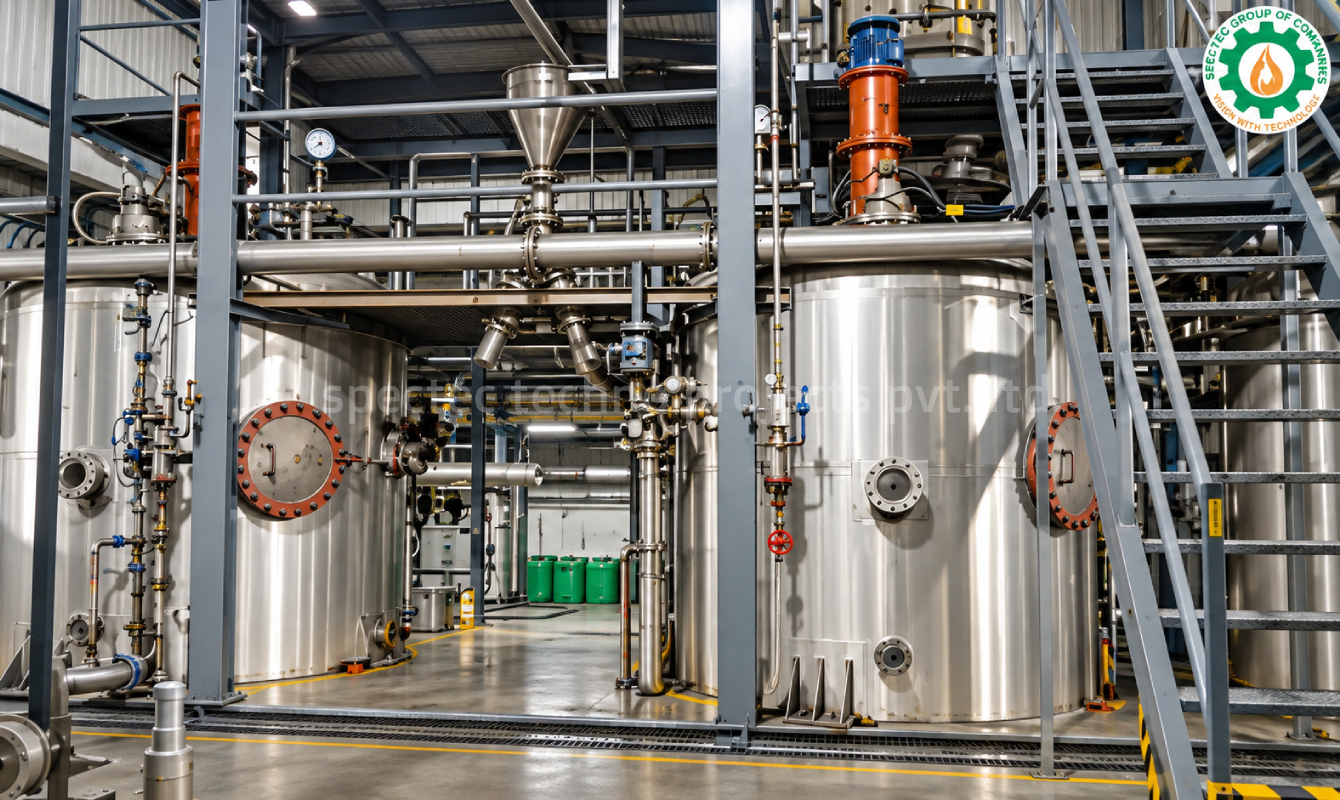
Inter-esterification helps in modifying the physical properties of the oil by an interchange of fatty acids between and inside the different triglycerides, by means of a catalyst. This is done by a catalyst operating at about 100°C and under vacuum. The blending of oils at elevated temperature is done to interchange the fatty acid group.
Process of Interesterification/Fat Modification
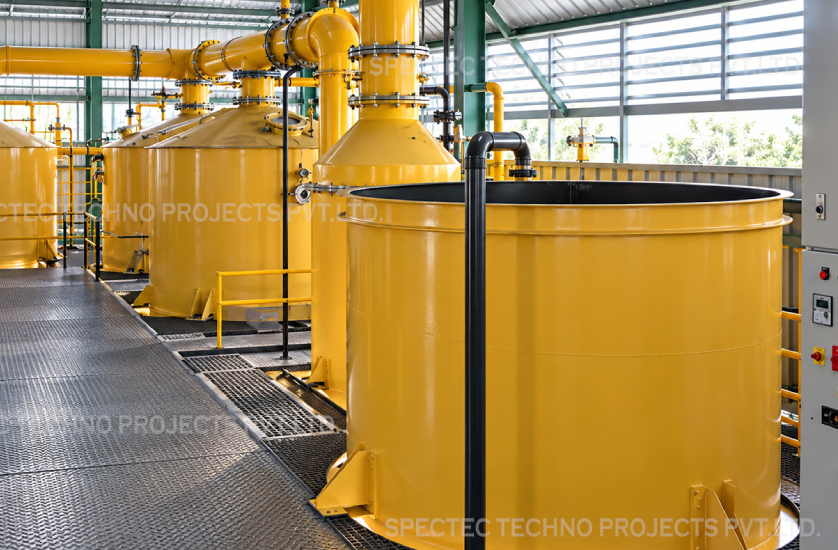
Palm Stearin and soft oil from storage tanks is directly pumped to the Homogenizer, where both the oils are heated and mixed properly. The homogenized oil is pumped to the Reactors for the further processing. The oil is heated to the reaction temperature with vigorous stirring, the catalyst is dosed in the required quantity this is stirred continuously to propagate the reaction. The reaction takes approximately one to one and half hour and total cycle time is approx. 4 to 5 hours the Inter- esterified oil is then transferred to the cooler for cooling and to the intermediate storage tanks.
Benefits of “inter-esterification” Section
- Oil Homogenizer is specially designed with higher mixing speed which ensures quick & effective mixing of two different characteristic oils (Hard and Soft).
- Reactor is a specially designed reactor to give intimate mixing of catalyst and oils to perform the reaction properly.
- Simple & low maintenance automations.
More Projects
Read More for Related Refinery Projects
Wax Purification Plant
Lecithin Powder Plant
Lecithin Plants
Acid Oil Plant
FAQ
Interesterification/Fat Modification Process
What is an interesterification plant and how does the process work?
An Interesterification Plant is a facility designed to modify the physical and chemical properties of fats and oils to produce products with desired melting points, consistency, and functionality without creating trans fats. It’s widely used in the edible oil, bakery, and confectionery industries.
Why is interesterification used in edible oil processing?
Interesterification is widely used in edible oil processing because it allows manufacturers to modify the physical properties of fats without creating harmful trans fats, while improving functionality for food applications.
What types of oils are used in the interesterification process?
The interesterification process uses a combination of hard and soft vegetable oils and fats, including palm fractions, coconut, soybean, sunflower, and specialty oils, to produce customized fats with desired melting, plasticity, and functional properties for food applications.
What are the benefits of interesterified oils in food production?
Interesterified oils allow food manufacturers to create healthier, functional, and stable products while providing better processing performance and customizable fat properties for diverse applications in margarine, bakery, and confectionery industries.
What is the typical reaction time in an interesterification plant?
Chemical interesterification is fast (minutes) and suitable for large-scale production. Enzymatic interesterification is slower (tens of minutes to hours) but more selective and produces trans-fat-free, high-quality fats.
What industries require interesterification technology?
Industries that require interesterification technology are primarily those producing margarine, bakery fats, confectionery fats, frying oils, specialty food fats, and oleochemical products, as the process allows control over melting points, texture, and functionality while eliminating trans fats.

Have questions?
Get in touch!
We are ready to assist with your engineering requirements. Reach out to our project desk through any of the following channels, and our technical team will get back to you with a preliminary assessment.
Have a Project Query?
+91 8470042125
Email Our Engineering Desk
info@spectecindia.com