
Bakery Shortening and Margarine Plant Manufacturer
- Home
- Projects for Value Addition
- Bakery Shortening & Margarine Plant
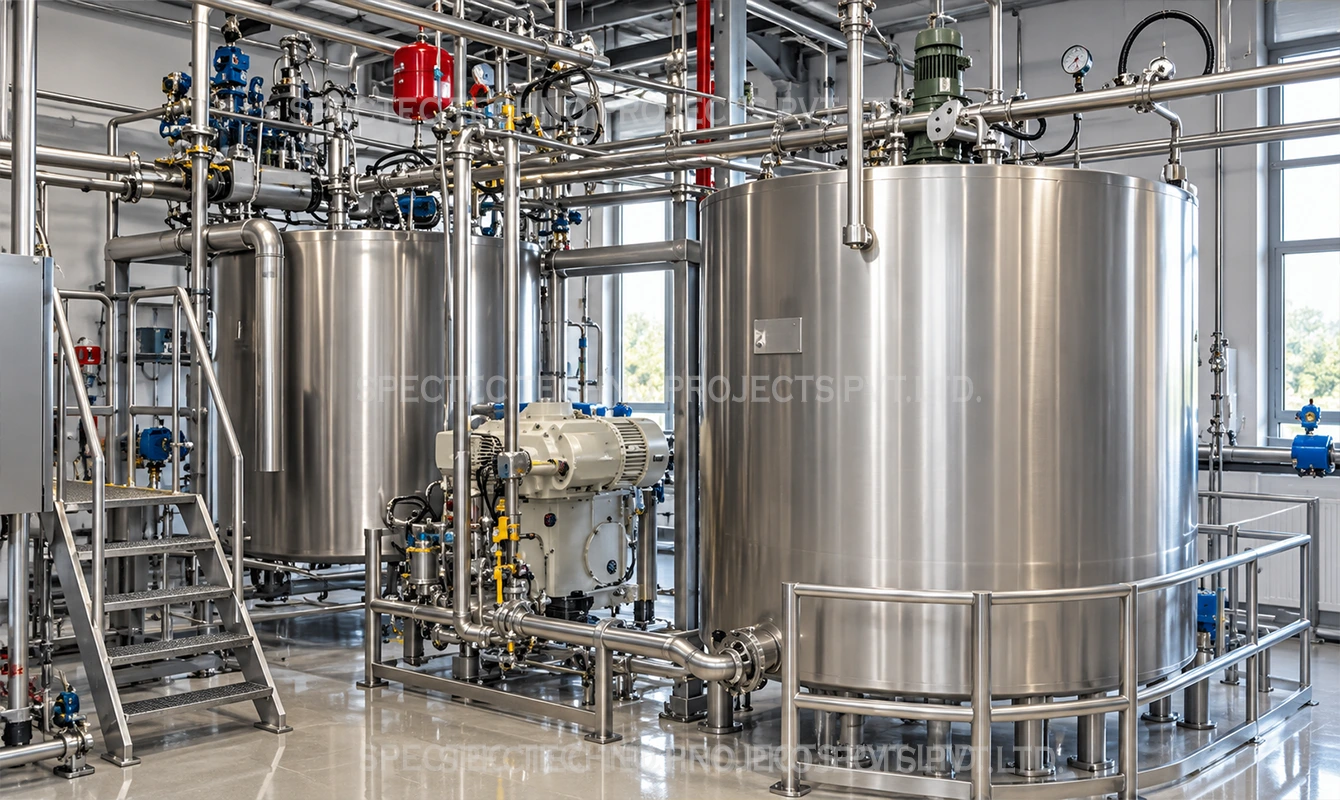
Shortening is a fat product that can be made 100 percent from vegetable fats and oils. It is commonly used to replace butter within baking procedures and is dairy free. The lack of water content within shortening reduces the risk of products going soggy, ensuring they remain crunchy and sturdy for longer periods. Unlike oil, shortening remains solid at room temperature allowing it to be stored and stacked. Bakery shortening contributes to a softer, fluffier texture with golden colour with consistency.
Margarine Plant Process
Types of Margarine Plant
Margarine is basically an emulsification of water in fat, resembles butter in appearance, character and composition. The fatty phase is normally a mixture of vegetable oils and animal oil and fat and aqueous phase skim milk or water or mixture of them. Small quantity of other ingredient such as salt, flavour and emulsifier may be incorporated through either of faces. There are various types of margarine for specific application of which most popular are table industrial and pastry margarine.
The raw materials for the manufacture of margarine/bakery shortening are vegetable oils such as palm, sunflower and soya bean oils. Vegetable Oils consists of Glycerine & Fatty Acids.
The most common, naturally occurring fatty acids are oleic acid and linoleic acid which are both unsaturated. Unsaturated oils have low melting points and some are relatively unstable to oxidation. Higher melting points and greater stability are achieved by the conversion to margarine by the process of hydrogenation where hydrogen reacts with carbon
Table Margarine
Table margarine consists of:
Soft Margarine Tub, With The Following Characteristics:
- Temperature Emulsion Tub Soft Margarine About 95 – 105 degree F (35 To 40.6 degree C ).
- Form Of Soft And Can Still Smeared At Temperatures 5 - 10 degree C .
- The Product Is Too Soft, Therefore, Wrapped In A Plastic Tub Or Plastic Cup Which Is Equipped With Adhesive Cover.
Margarine, With Characteristics As Follows:
- Temperature Emulsion Stick Margarine Adjusted And Regulated Under The Body Temperature At 100- 105 degree F (37.8 To 40.6 degree C).
- Can Be Smeared At Temperatures 20 – 25 degree C.
- More Rigid Than White Butter (Shortening).
Industrial Margarine
Margarine industry is designed for bakery and pastry industry. Made from vegetable oils that have been purified. Applications recommended for biscuits, cake industry and bakery. It is slightly harder than table margarine. Industrial margarine used for bread and cake mix. Margarine should be stored in a dry and cold environment at a temperature of about 30 degree C.
Puff Pastry Margarine
The puff bakery is very from the normal Industrial Bakery Shortening/table margarine and Industrial margarine the function of puff pastry margarine is as a protective layer between the layers of cake batter.
Cream Margarine & Shortening
Cream margarine is used in the decoration and filling of cream for cakes. The composition of the cream might differ, but in general it is produced by whipping the margarine together with powdered sugar, sugar syrup or milk.
Advantages Margarine Plant :
- Best texture, consistency & Plasticity.
- Intimate mixing of Oil Phase, Water Phase.
- Best Quality & Hygienic Final Product.
- Cost Effective Operation & better productivity.
- Simple & Low maintenance .
More Projects
Read More for Related Refinery Projects
Lecithin Plants
Lecithin Powder Plant
Acid Oil Plant
Inter Esterification Plant
FAQ
Bakery Shortening and Margarine Plants
What is a bakery shortening and margarine plant and how does it work?
A bakery shortening and margarine plant is a food-processing facility that produces shortening and margarine—two types of fats widely used in baking and cooking. These products are made mainly from vegetable oils that are processed to achieve specific textures, flavors, and stability
What is the difference between industrial margarine and table margarine?
The difference between industrial margarine and table margarine mainly lies in composition, functionality, texture, and end use. Both are margarine products made from vegetable oils, but they are designed for different applications.
What is the production capacity of a bakery shortening and margarine plant?
The production capacity of a bakery shortening and margarine plant refers to the amount of product the plant can manufacture per day or per hour. Capacity varies depending on plant size, equipment, and target market (local bakery supply vs. large food industry).
Which industries use bakery shortening and margarine products?
- Products made
- Bread
- Cakes
- Cookies
- Biscuits
- Puff pastry
- Croissants
What are the advantages of installing a modern margarine manufacturing plant?
Installing a modern margarine manufacturing plant offers many advantages for food producers, especially because modern technology improves product quality, efficiency, safety, and profitability. Margarine is usually produced from vegetable oils such as Palm oil, Soybean oil, and Sunflower oil.

Have questions?
Get in touch!
We are ready to assist with your engineering requirements. Reach out to our project desk through any of the following channels, and our technical team will get back to you with a preliminary assessment.
Have a Project Query?
+91 8470042125
Email Our Engineering Desk
info@spectecindia.com